Picking Through the Remains
Submerged Cities Part Two
For half a century, an artificial lake has hidden the place where the Euphrates is born from two major tributaries. It’s a tranquil spot to swim at sunset. The trout is perfect. Underneath lie over a hundred villages, holy places, and ancient sites.
The lake was created in 1974, when Turkey built its first hydroelectric dam at Keban. Much of the rainwater that had once flowed from the mountains of Anatolia to nourish the ancient cities of Mesopotamia now stops here.
In 1966, the year construction began, the Turkish archaeological community snapped into action. A team of first-year grad students from Ankara crisscrossed the soon-to-be-flooded valleys of Aşvan and Altınova in jeeps, documenting every old building and strangely shaped mound that impressed them. They printed a pamphlet about what was going to be destroyed and started asking archaeologists from around the world to excavate the mounds they identified.
It was practically an archaeological terra incognita. But work in nearby regions since the 1930s suggested that it might be an important area in the search for the world’s first permanent villages. About a dozen teams answered the call. Many of the oldest generation of Turkish archaeologists still alive today were trained there.
They dug from 1968 to 1974. The water set the deadline.
It was a turbulent time to try to save the past. The hippie trail brought thousands of young Europeans across Turkey in search of transcendent meaning. Leftist and nationalist gangs fought in the streets — violence that would escalate into civil war by the late ’70s. The government lost control of Istanbul for two days in June 1970. In 1972, the mountains surrounding the excavations erupted into open Maoist revolt while teams were digging. Survival handbooks warned foreign students to cut their hair and leave their cannabis at home.
Nevertheless, the first couple years of digging were a burst of excitement. Through continuous visits, cups of coffee and heated conversation in English, German, Italian, and Turkish, the excavators constructed a new 10,000-year chronological framework for the region.
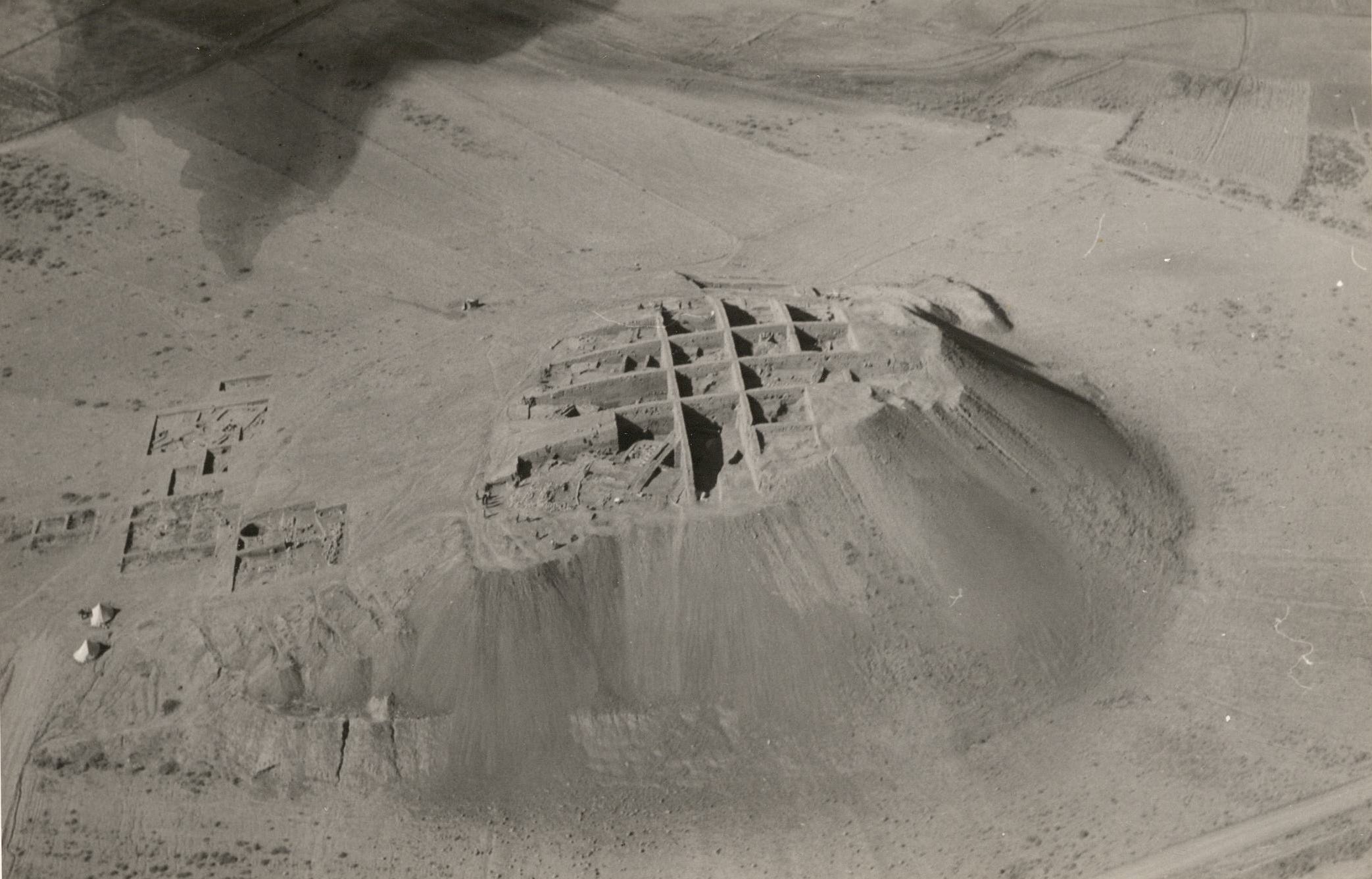
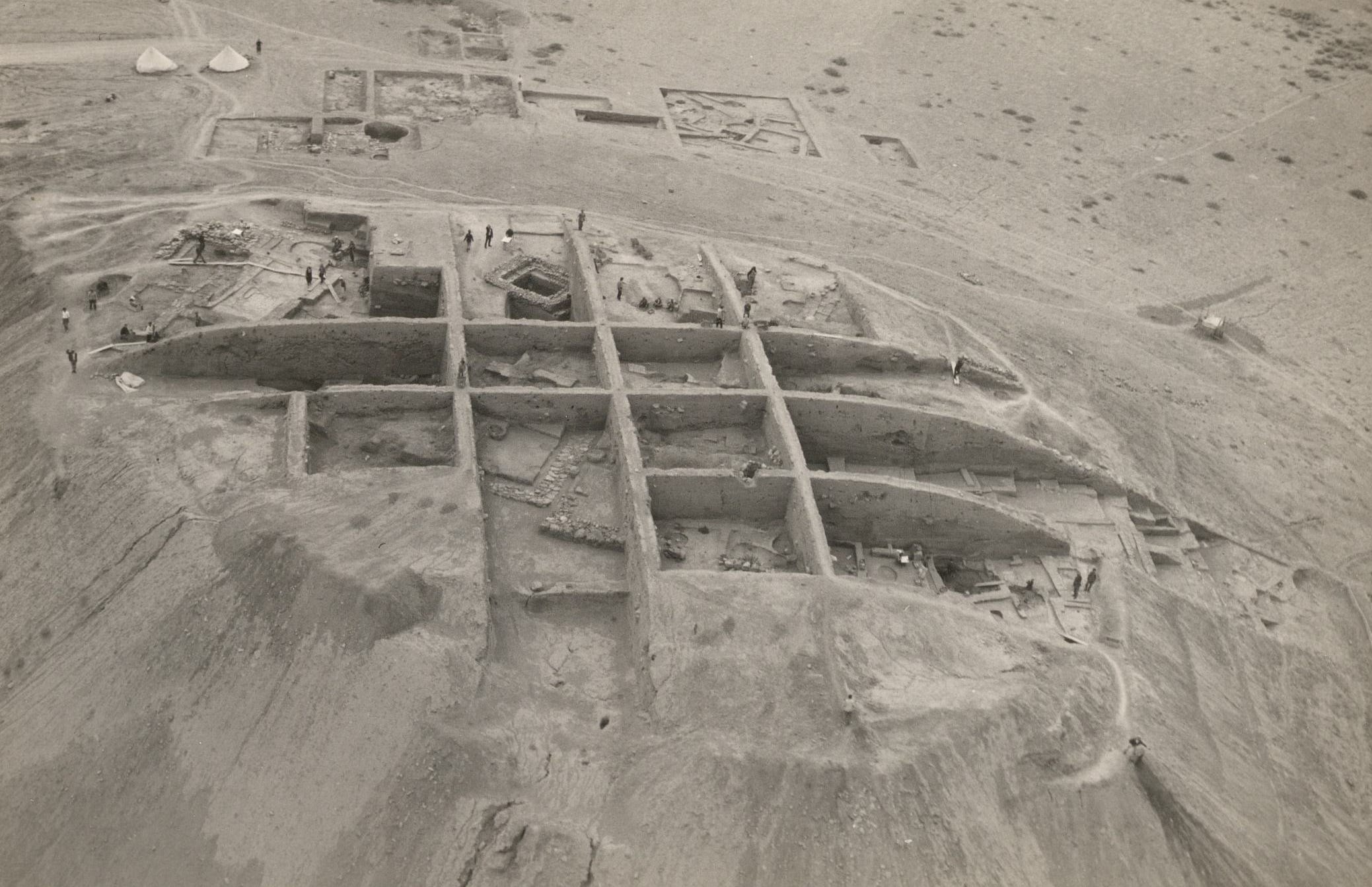
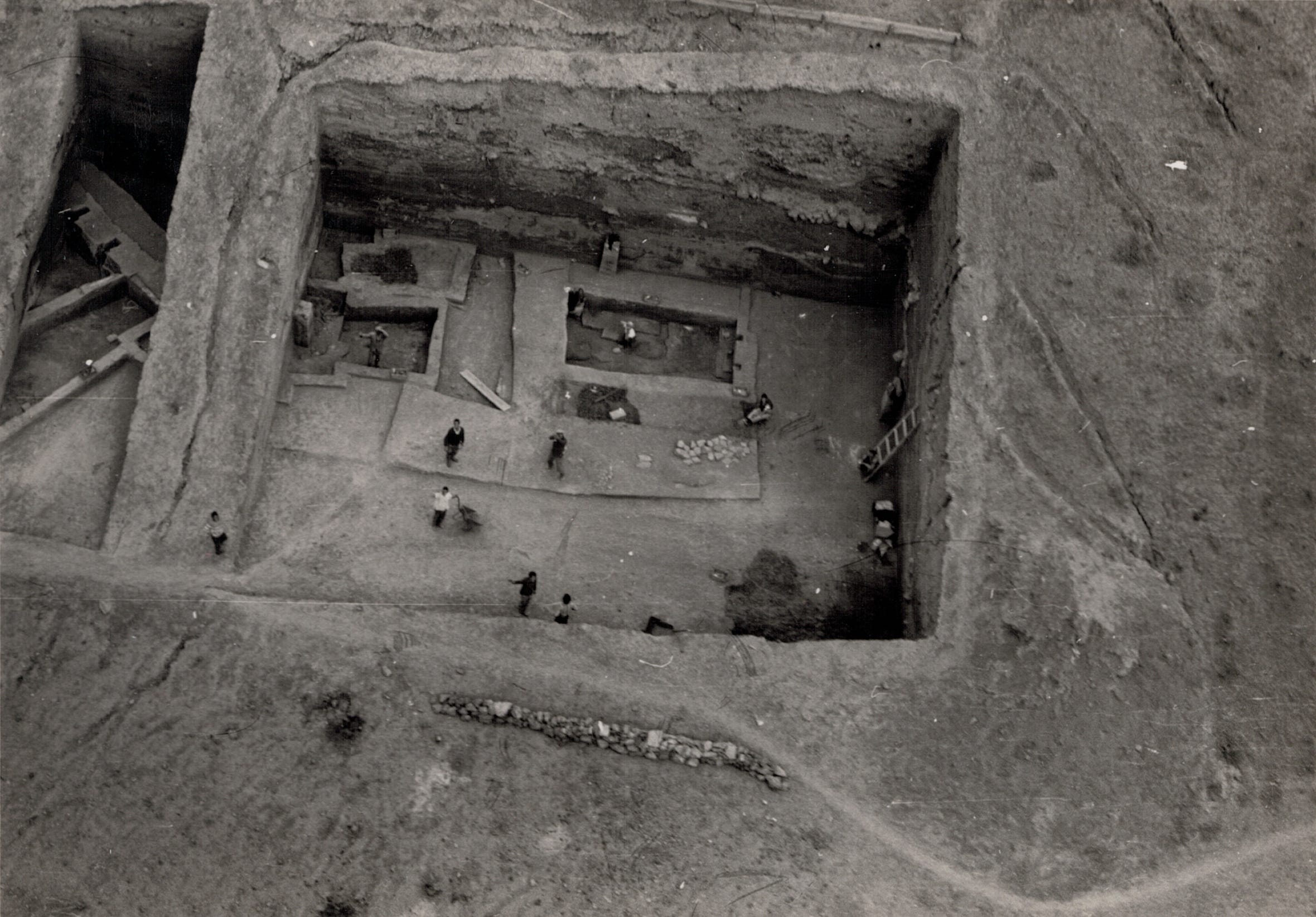
One team borrowed a helicopter and produced the first aerial archaeological photos in Turkey, now a mainstay of any self-respecting excavation. From the air, they photographed waving villagers on the flat roofs of homes that would soon be abandoned.
Expedition directors hired dozens of local farmhands to excavate the mounds as their last act before being driven from their homes by the rising water. Ethnographers photographed the last days of village life.
~*~
Archaeologists often quip that “excavation is destruction.” In order to understand and tell stories of the past, we have to destroy the evidence. We dig through houses and temples and marketplaces that have survived under the ground for thousands of years — disassembling them piece by piece — so that we can reassemble them in our heads. We just have to hope that we documented them perfectly in the process — we only get one chance. Scarred by the strip-mining practices of archaeology’s early years, we usually err on the side of leaving things in the ground for future archaeologists with more advanced methods.
In recent decades, this has become an obsession. Archaeologists now save every ounce of sediment, run it through half a dozen sieves, and pick through the remains under a microscope — tiny bits of eggshell, mouse teeth, debris from sharpening a knife. Entire PhDs are built on the dirt from a few 5x5 meter squares. Many students burn out before they publish.
The result is that digging has become extremely slow. It is harder to understand entire neighborhoods than it was 80 years ago, though we can know much more about an individual room — if the work ever gets finished. At Keban, they didn’t have that luxury.
The Keban excavations held a unique place in this dance between destruction and knowledge. No matter how carefully the teams dug, in 1974 it would all be over. The waters of the reservoir would eat away the sediments of each ancient town, layer by layer, mixing thousands of years of fragments at the bottom. There would be no future archaeologists. So the teams dug faster and wider. Archaeologists excavated far more of the region’s dirt in this 7-year period than in the half-century since.
Of all the teams, the one at Norşuntepe dug the most furiously. Harald Hauptmann, a young German archaeologist from Heidelberg, knew the clock was ticking. Each year, his team stayed longer and dug deeper, anxious to document as much as possible. They worked until snow covered the mound and the earth froze solid. In a few years, they uncovered broad Early Bronze Age neighborhoods — work that would take decades today. And they revealed a monumental palace that swallowed these neighborhoods generation by generation.
Then the water came in 1974. The objects deemed worthy of saving were placed in a new museum in Elâzığ, the provincial capital. The villagers left their homes for Elâzığ or Istanbul. The archaeologists packed up and went downstream to document sites that would be flooded by the next dams: the Karakaya Dam, completed in 1987, and the Atatürk Dam, completed in 1992.
They never got around to publishing most of what they learned during the Keban excavations.
Thousands of pages of daily journals, object registers, plans, drawings, and photographs started collecting dust in university archives in Istanbul, Ankara, Heidelberg, and Chicago as the water wore away at the ancient sites and spoil heaps the teams left behind. As the decades passed, excavators grew old and died. Departments moved buildings. Administrators dumped the piles of notebooks into Bankers Boxes to save space. Pages got lost.
~*~
In 2017, 50 years after the first pickaxes struck the Keban sites, I began my journey across the globe to reopen the boxes.
From the clues that made it into print here and there over the years, I knew they contained something special: the story of the revolutionaries who destroyed a nearby palace — the world’s first — around 3200 BCE. How they remade society from the ground up with no permanent social hierarchies. And how their descendants finally built and expanded the new palace at Norşuntepe 1,000 years later.
For 10 years, I have been piecing this story together. In the process, I have waded through the chaotic archives from five Keban sites, spread across three continents, handwritten in four languages.
By the time I started, only one excavation director was still alive: Harald Hauptmann. I wrote him in April 2018. In May, he sent a single-spaced, five-page letter supporting my work. By August he was dead. I never met him.
But I did spend two summers in Heidelberg squeezing the secrets from the Norşuntepe archives.
I first came to Heidelberg in the summer of 2019. It’s a sweet little town on the slopes of a canyon overlooking the winding Neckar River. Its tranquil beauty inspired Goethe and Hegel. It represented the German spirit to the Nazi intellectuals that crowded its alleys in the 1930s. It’s one of the only towns of its size to escape the Allied bombing raids intact.
When I got there, the department chair greeted me with a warm smile. He was always happy to chat about my research. But he told me I couldn’t visit the archive. A fire marshal needed to be present. Instead, they brought me dozens of photocopied notebooks. Each day, I sat and catalogued every room, every level, every find; each evening, I found myself wandering an old village or ruined castle along the Neckar.
I worked with what I had for three years, but by the summer of 2022 I knew I needed more.
I returned to Germany and insisted on seeing the archive. When I got there I understood why a fire marshal was necessary.
Hauptmann’s former student unlocked a door to a crumbling, decommissioned cancer research lab. Inside, lab benches and cabinets were stuffed with notes, plans, and photographs. But there was a catch: strict estate rules forbade removing — or even moving — a single sheet. So, I photographed each page with my phone, one by one, under a flickering fluorescent light, racing against the clock. This would be my only day there.
I’d spend years sifting through the photos I took that day, wondering which pages had gotten lost when they moved the archive — and which I’d missed in a drawer or crevice where an inopportune shadow happened to fall.
~*~
The previous year, I had been in Istanbul for an extended research stay, immersing myself in the archives of Tepecik, another Keban site. By the summer, I was ready to put together what I had learned and go back to writing. But there was one last thing I had to do in Turkey: visit the reservoir.
I needed to clear my visit with the relevant authorities. I budgeted a long day for a dozen cups of tea and my endearing, hesitating Turkish to do the trick. Everyone I talked to opened with the same apology: my visit wouldn’t be possible. The Elâzığ museum was closed since a 2016 bombing. The nearby military police base was on alert after a devastating earthquake in 2020. Ten hours of haggling later, I was the most caffeinated I’d ever been. But I made it to the reservoir.
By 1975, water covered every ancient site explored in the seven previous years. But after half a century of intermittent drought and diversion for agriculture, Norşuntepe began to peek its head over the surface during the long, hot summer.
It was an island in the lapping waters of the reservoir. I hired a fisherman to take me in his boat. But first, we ate fish and had a warm beer. His daughter was getting married that week, so he was in a celebratory mood.
I was anxious to go. The sun was threatening to disappear over the mountains. So we set off on his small boat, motoring through the sparkling evening ripples.
The moment the boat hit the shore, I jumped off onto a fresh layer of the ancient town, exposed for the first time by that year’s receding water. I climbed to the top of the mound. The palace was gone. Whatever mudbrick walls the excavators left had melted away into the water of the reservoir. What was visible was from before the palace existed — the layers I was most interested in. The ones that hadn’t been excavated and never would be.
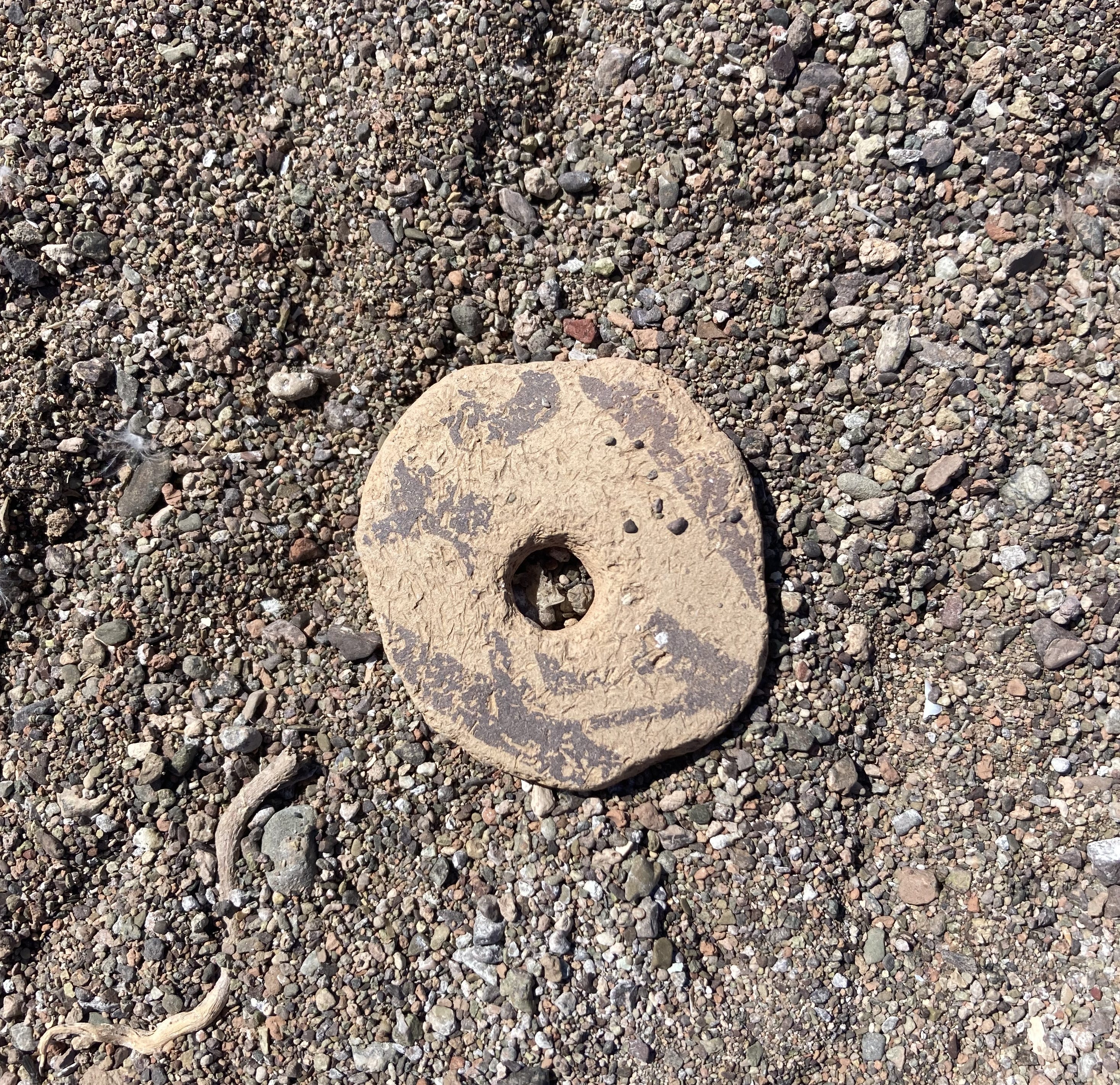
On the ground I spotted a round painted object. It was a spindle whorl — a weight used for spinning thread. It had been carefully sanded from the fragment of a shattered jar, too precious to let go of when the vessel broke.
It’s an impulse I understand all too well.
From the style of its painted design, I knew the jar was made and decorated by hand around 2800 BCE, halfway between the destruction of the old palace and the construction of the new one.
We will never know who made it. The remains of their home, their kiln, and their loom have all been swept away by the water. Yet there it was, lying on the surface after 5,000 years — a hand-crafted, well-loved remnant from the thousand years without a palace.
~*~
We look to the past to understand ourselves — to know where we came from, what we are striving for, and why. To do this, we have to relive a world that is gone.
Imagining what came before us is difficult. We try to recite stories that our elders managed to tell us before they left. Beyond that, we have to rely on fragments: little pieces of existence that someone left behind in a moment of tragedy. Wars, fires, and famines preserve the most clues because they end the corrosive continuity of daily life.
But despite our best efforts, these fragments refuse to remain preserved. A mouse makes a home in an ancient wall and decorates it with plastic bottle caps. A flood washes away the broken pots that fell from the shelf when a family fled. Archaeologists dismantle a burnt-down neighborhood brick by brick. Their notes get shuffled and misplaced.
We can spend our whole lives chasing these relics down, guarding them from the elements, trying to learn from them before they’re gone. That’s what I’m doing most days. It’s like trying to collect all the leaves from a perfect autumn day in a Ziploc bag as they blow away in the wind.
Yet, every once in a while, a remnant we thought was lost comes back to the surface — an apparition of a long-gone world, suddenly in focus. Then it disappears again into the abyss.
In that brief moment of presence, will we be there to hear its story?
~*~
In two weeks: Becoming masters of water.
Previous: Watching a city drown.
Text © 2026 Akiva Sanders. Drawings © 2026 SaraNoa Mark. Photos © 2026 Akiva Sanders and SaraNoa Mark, unless otherwise indicated. All rights reserved.
All ideas shared here were developed jointly in conversation.
Special thanks to Harald Hauptmann, Mehmet Özdoğan, Marcella Frangipane, Joseph Maran, Michael Morsch, Lutgarde Vandeput, Francesca Balossi Restelli, Eylem Özdoğan, Necmi Karul, the US Department of Education, and the American Research Institute in Turkey for making this research possible.
Further Reading:
Keban Project Activities Series (Middle East Technical University, 1970-1982) — The preliminary reports on the Keban excavations: dry and brief, but they hint at many secrets.
Dissard, Submerged Stories from the Sidelines of Archaeological Science: The History and Politics of the Keban Dam Rescue Project (1967-1975) in Eastern Turkey (UC Berkeley Dissertation, 2011)
Sanders, Violence & Imagination After the Collapse (Brepols, 2024) — My book that tells the story of the 1,000 years without a palace with details from the Keban archives.
Photos of Norşuntepe in 1972 taken by Tepecik excavation director Ufuk Esin from the borrowed helicopter, part of the Tepecik Excavation Archives (special thanks to Mehmet Özdoğan and Maria Bianca D’Anna).